

Interest in at-home wellness solutions has been growing steadily. More and more, people see their home not just as a place to live, but as a personal sanctuary, a space to slow down, recover from daily routines, and create a sense of balance that is often missing outside. This shift is also linked to the fact that we now spend more time at home, whether due to new work habits, a greater appreciation for personal time, or simply a different way of understanding comfort and quality of life.
Among these solutions, the sauna stands out for its strong connection to wellbeing and its widely recognised health benefits. Still, when it comes to installing a sauna at home, very practical questions arise around costs, initial investment, ongoing expenses, and long-term maintenance. In practice, the real question is not just how much a sauna costs, but whether that investment makes sense for the way each person lives, uses their home, and values their time.
Is it really possible to have a sauna at home?
For many years, saunas were almost exclusively associated with hotels, spas, or gyms. Today, that reality has changed. With more compact, efficient solutions designed specifically for residential use, having a sauna at home is no longer exceptional, it is a realistic option for those who value comfort and daily wellbeing.
In practice, the experience is very similar to that of a spa, but with a clear advantage: it is integrated into everyday life. There are no commutes, schedules, or shared spaces. The sauna is available whenever it makes sense, at the end of the day, after training, or simply as a moment of pause.
Types of sauna and how they directly affect cost
The first major factor that determines the cost of a home sauna is the type of technology chosen. This is not just a matter of personal preference. Each type of sauna involves clear differences in equipment, installation, energy consumption, and long-term maintenance.
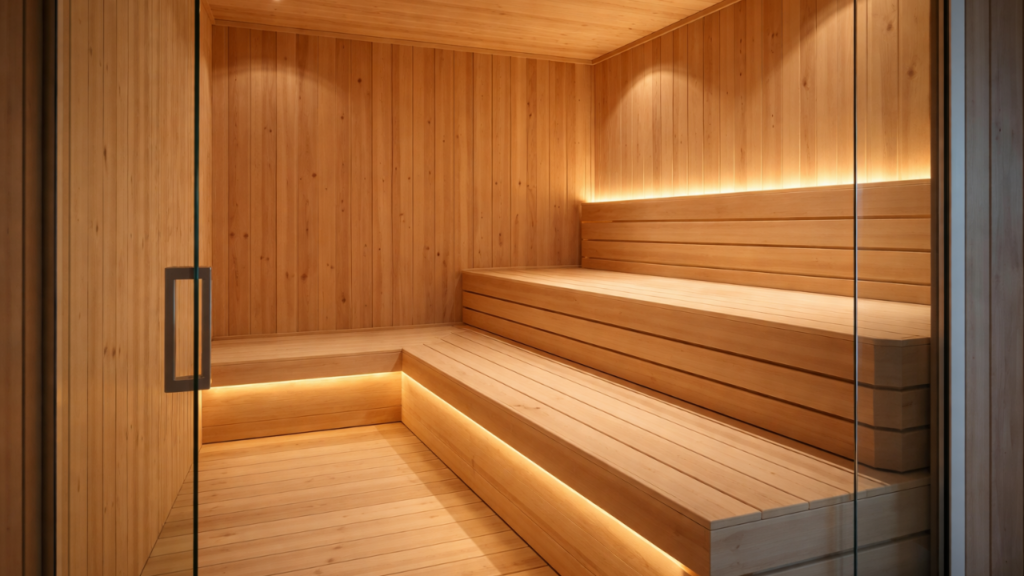
Finnish sauna, traditional dry sauna
The Finnish sauna is the most widely known model and the one that comes closest to the classic sauna experience. It operates using an electric heater that warms stones, reaching high temperatures with low humidity levels.
A long-term study published by the National Institutes of Health followed thousands of users over several years and found an association between regular sauna use and a lower incidence of cardiovascular problems, which helps explain its lasting popularity.
In terms of costs in the Portuguese context, it is realistic to consider:
- prefabricated models for one or two people, typically between €3,500 and €6,000, depending on material quality
- custom-built saunas integrated into the space, usually between €6,500 and €12,000, with higher values for more personalised projects
- moderate to high electricity consumption, especially during the initial heating phase
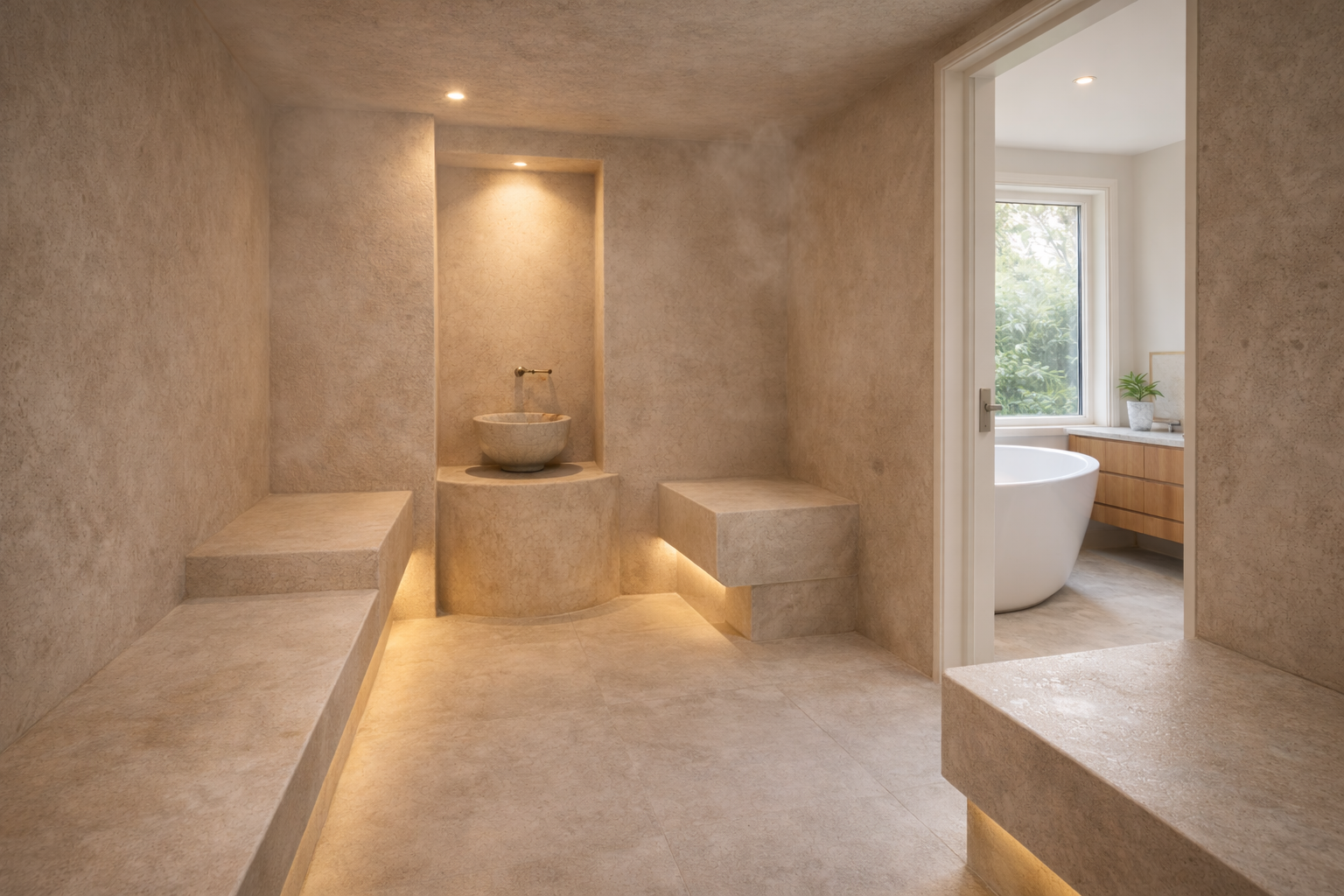
Steam sauna, Turkish bath
The steam sauna operates at lower temperatures but with very high humidity levels. The sensation is different from a dry sauna, more enveloping, more humid, and generally more comfortable for those who do not tolerate intense heat.
According to the Cleveland Clinic , steam environments can help temporarily relieve respiratory congestion and promote a general feeling of relaxation when used appropriately and without excess.
From a financial perspective, this is usually the most demanding option:
- the steam generator and base equipment typically cost between €3,000 and €5,000
- construction, waterproofing, and finishes range between €4,000 and €8,000
- the most common total cost falls between €7,000 and €13,000
- maintenance is higher than a dry sauna due to constant humidity and scale management
Infrared sauna
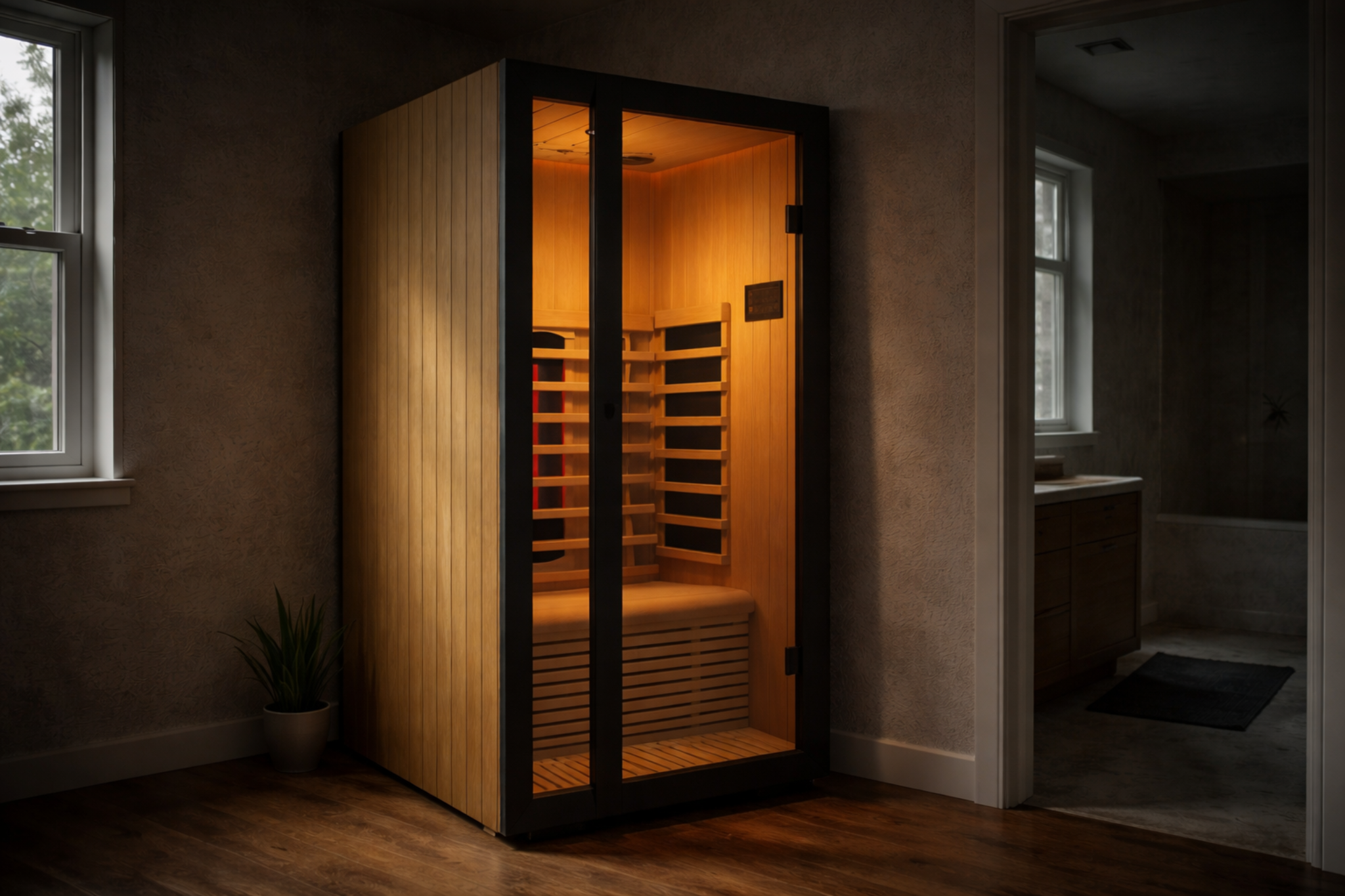
Infrared saunas heat the body directly through panels rather than heating the surrounding air. They operate at lower temperatures and are often chosen by those looking for a simpler, more efficient solution that is easy to integrate into daily life.
A scientific review published in Mayo Clinic Proceedings notes that this type of heat can contribute to muscle relaxation and physical comfort, especially when used regularly.
In terms of costs:
- compact cabins for one or two people typically range from €2,500 to €4,500
- premium or customised models usually cost between €5,000 and €7,000
- energy consumption is lower compared to traditional saunas
Installation costs, where many decisions go wrong
Beyond the equipment itself, installation is often underestimated. Costs vary significantly depending on the available space, whether the sauna is installed indoors or outdoors, and whether existing infrastructure is already in place.
Installation may involve electrical upgrades, proper ventilation, waterproofing in the case of steam saunas, and minor space adaptations.
According to data from the European Spa Association , installation costs for residential projects typically range between €800 and €3,000, with higher values for more complex setups.
Running and maintenance costs over time
Unlike solutions that require permanently heated water, such as spas or jacuzzis, saunas do not require chemical treatments or frequent water changes, which significantly simplifies maintenance.
In general:
- dry saunas require regular cleaning and periodic heater checks
- infrared saunas require minimal maintenance
- steam saunas require more attention due to humidity and limescale
Under normal home use, two to three sessions per week, the impact on electricity bills tends to be controlled and predictable.
Sauna, spa or jacuzzi: what is the cost difference?
When comparing saunas with spas or jacuzzis, saunas stand out for their lower long-term running costs, mainly due to simpler maintenance and the absence of continuous water consumption. For those looking for a sustainable at-home wellness solution, this factor often plays an important role in decision-making.
Proven benefits and investment value
The Harvard Medical School states that exposure to sauna heat triggers a cardiovascular response comparable to moderate physical exercise, helping explain why many people experience consistent benefits when using a sauna regularly.
The European Society of Cardiology has also published studies linking frequent sauna use to improvements in cardiovascular health, reinforcing the idea that this investment goes beyond immediate comfort.
Beyond health benefits, saunas also influence how a home is lived in. They help establish a consistent routine of recovery and rest, something many people only fully appreciate after integrating a sauna into daily life, and can also add value to a property designed around wellbeing.
So, is it really worth it?
A home sauna makes sense when there is a genuine intention to use it regularly and when the goal is to improve daily quality of life and wellbeing. In terms of cost, it sits within a clear and predictable range, especially when compared to other at-home wellness solutions.
For those who value comfort, quiet, physical recovery, and quality time, a sauna stops being just an extra and becomes a natural extension of how the home is lived.