

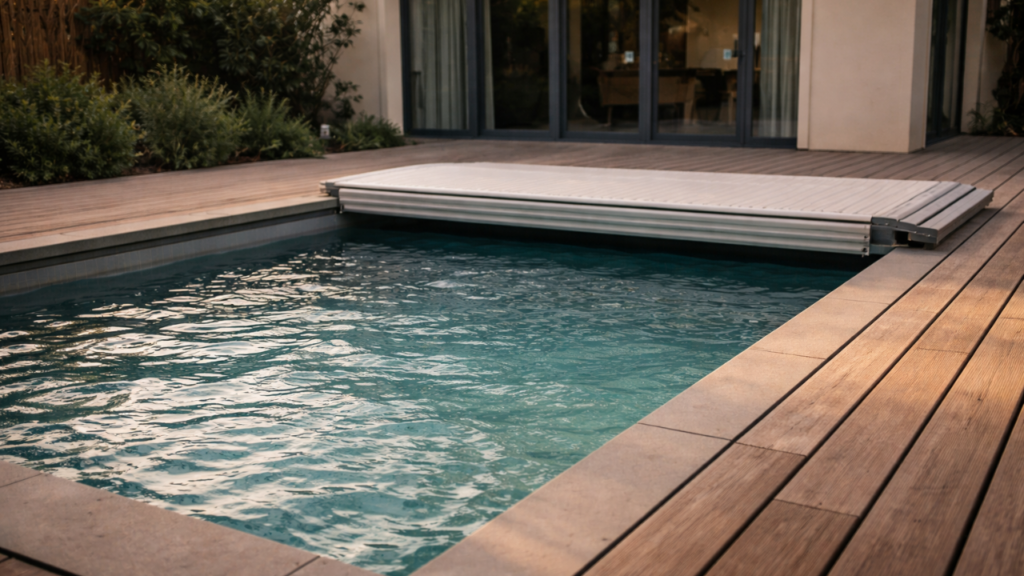
Having a swimming pool at home is, at first glance, associated with free time, comfort and good moments. But those who live with a pool know that it is not limited to summer days. There is always maintenance, there are costs, there are safety concerns and practical decisions that end up making a difference over the years.
It is usually in this context that the question of pool covers arises. Not as a whim, but as something that can make life easier — or not — for those who own a pool. The question is simple: does it make sense to invest in a cover, or is it just another cost?
What is a pool cover actually used for?
A pool cover is designed to limit what happens when the pool is not being used. It protects the water, reduces the entry of dirt and helps maintain more stable conditions between uses.
It is not a new solution, but the way pool covers are designed today is much more suited to residential use. There are simple options and more integrated solutions, but they all start from the same idea: making the pool easier to manage on a day-to-day basis.
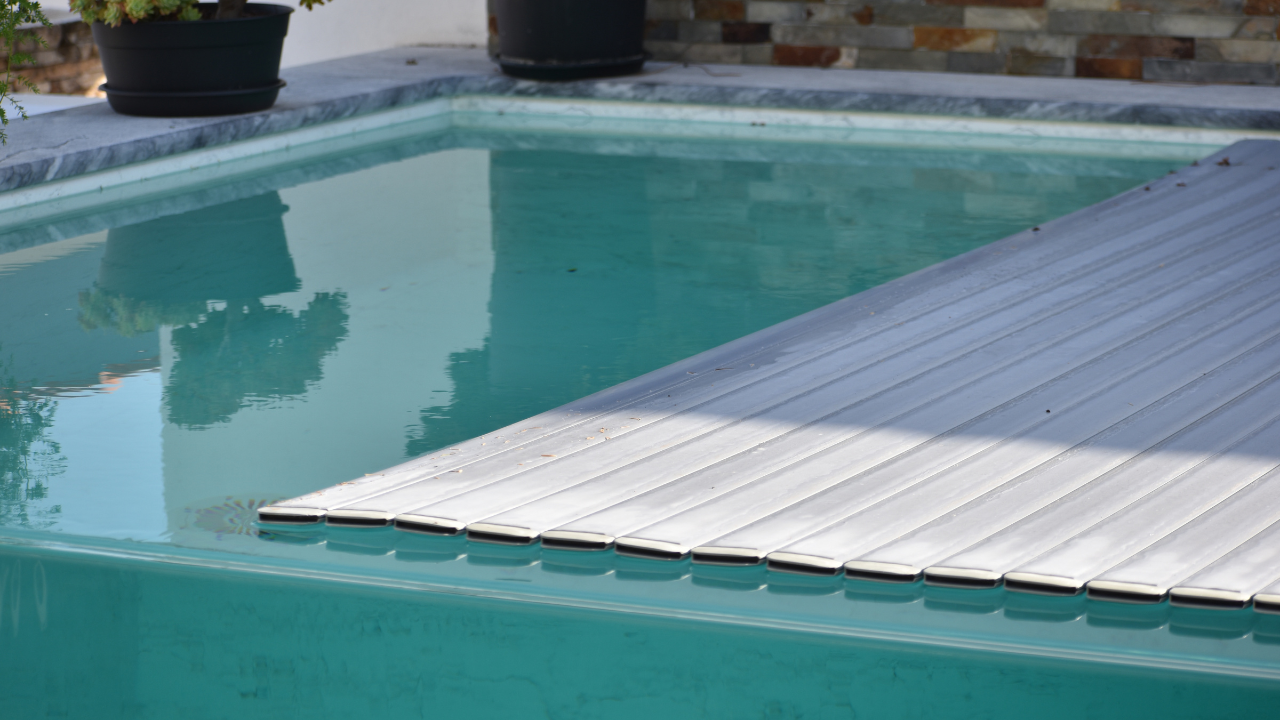
Safety, especially when there are children
For many families, safety is the main reason to consider a pool cover. Even with care and attention, a swimming pool is always a risk factor, especially in homes with children.
Data collected by the Centers for Disease Control and Prevention show that falls into swimming pools remain one of the leading causes of serious domestic accidents involving young children, particularly when there are no adequate physical barriers in place.
A pool cover does not replace attention or supervision, but it clearly reduces the risk of someone falling into the pool when it is not in use. For many families, this provides peace of mind that is difficult to quantify, but easy to feel in everyday life.
Less dirt and less time spent on maintenance
Anyone with an outdoor pool knows the scenario well: leaves, dust, insects and small particles that inevitably end up in the water. A pool cover significantly reduces this problem.
According to the Pool & Hot Tub Alliance , protecting the pool surface helps keep water quality more stable and reduces the effort required from the filtration system.
In practice, this means less time spent cleaning, fewer frequent interventions and a pool that is ready to use more often, without lengthy preparation.
Water, energy and chemicals
One of the less obvious aspects, but one that weighs heavily over time, is evaporation. In outdoor pools, the loss of water and heat happens every day, especially at night or during windy periods.
Technical information published by the U.S. Department of Energy indicates that evaporation is one of the main causes of energy loss in heated pools and that using covers is one of the most effective ways to reduce it.
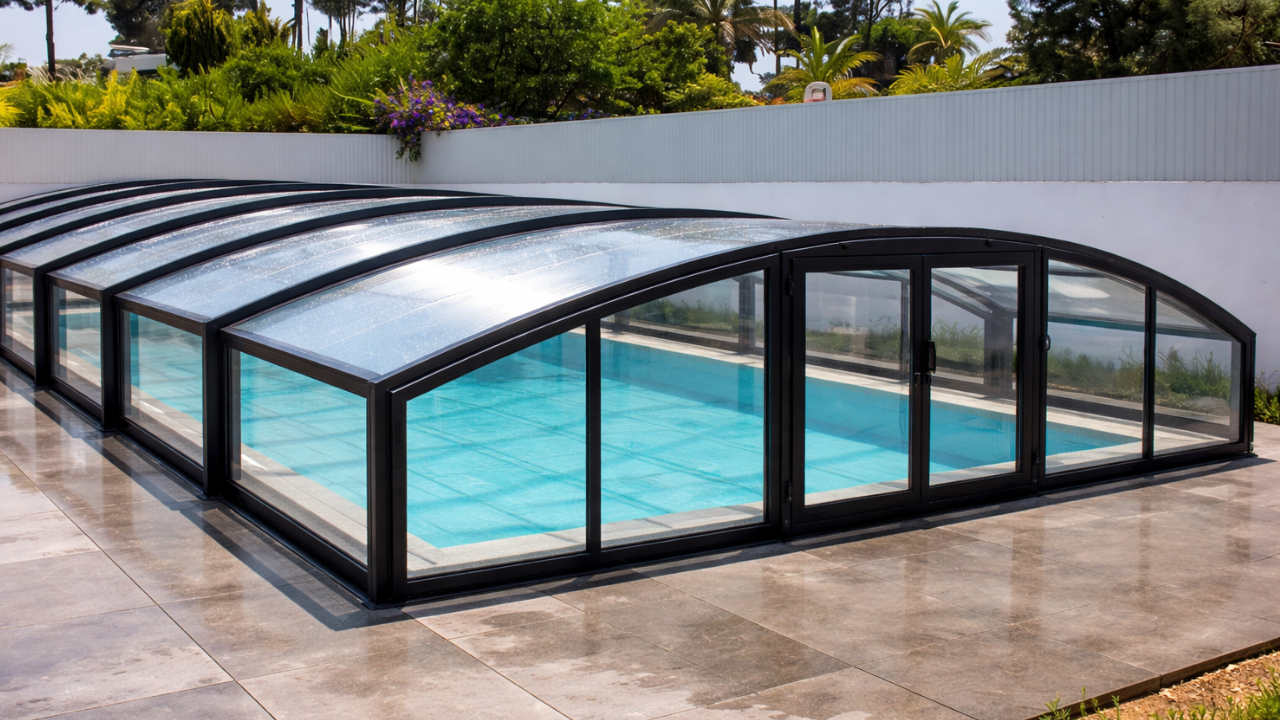
With a pool cover, less water is lost, the temperature is maintained for longer, heating systems work less when present and there is a reduced need to replenish chemical products. Over the years, these factors result in a clear reduction in the costs associated with owning a pool.
How much does a pool cover cost?
Prices vary widely, but in the Portuguese residential market there are some reference ranges that help frame the investment. These are not fixed values, but realistic ranges.
Simple manual pool covers typically range between €500 and €1,500.
Thermal or roll-up pool covers commonly cost between €1,500 and €3,500.
Automatic pool covers are, in most cases, priced between €4,000 and €8,000, and can be higher for more customised projects.
The long-term impact
A pool cover should not be evaluated solely based on its initial cost. By reducing water loss, energy consumption and equipment wear, it helps ease recurring expenses over the years.
In addition, constant protection of the pool helps preserve finishes, systems and components, delaying repairs and more significant interventions.
So, is it worth investing?
It always depends on how the pool is used and valued. For those who use their pool regularly, care about safety or want to reduce maintenance time and costs, a pool cover makes sense.
It does not just change the appearance of the pool. It changes the way the pool is used, managed and maintained on a daily basis.